


 Home Security & Locksmith Tips
How to Secure Your Home Against Pet Door Entry
 Alex Morgan
 Oct 10, 2026
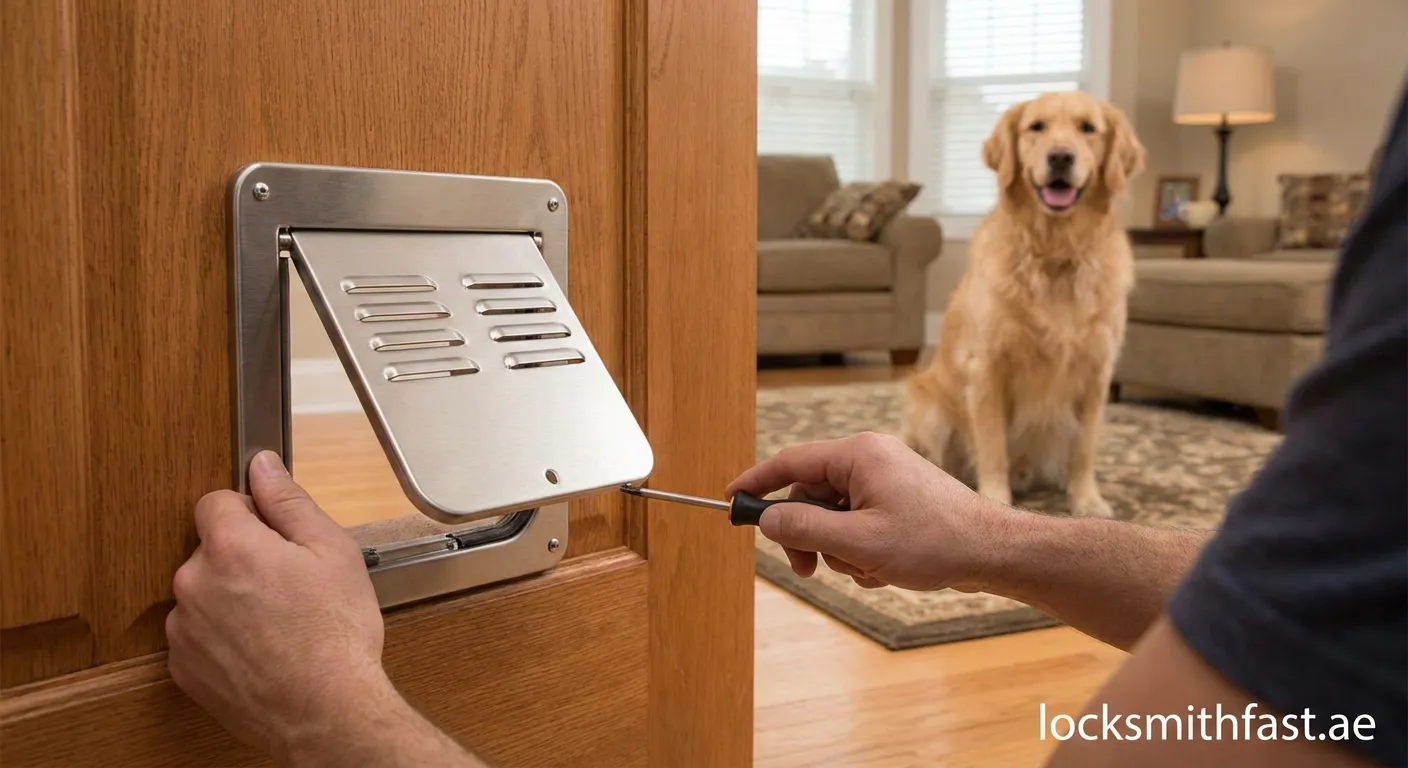
Pet doors offer great convenience for pets, but they can become security risks. Learning how to secure your home against pet door entry protects your family without limiting pet freedom.
Why Pet Flaps Present a Security Vulnerability
Pet doors are an undeniable convenience for pet owners, granting dogs and cats independent access to yards. However, an unprotected pet flap can easily turn into an unintended entryway for intruders. While small flaps may seem harmless, crafty burglars use reaching tools, wire coat hangers, or send small accomplices through oversized dog doors. Understanding how to secure your home against pet door entry is crucial for maintaining overall perimeter security.
Common Risks Associated with Pet Doors
- Direct Intrusion: Extra-large dog doors can accommodate a slim person or child burglar.
- Lock Manipulation: Burglars reach their arm or specialized poles through the flap to unlock deadbolts or turn doorknobs from inside.
- Unwanted Wildlife: Raccoons, stray animals, and rodents can freely enter your living space.
Best Methods for Securing Pet Entrances
To eliminate vulnerabilities while keeping daily pet routines seamless, implement these practical security enhancements:
1. Upgrade to an Electronic Smart Pet Door
Modern microchip and RFID-activated pet doors remain firmly locked at all times. They only open when detecting a specific collar tag or microchip embedded in your pet. This prevents stray animals and potential intruders from manually pushing the flap open.
2. Relocate the Pet Door Away from Door Locks
If your pet flap is installed directly inside a wooden or metal exterior door, it places the indoor handle within arm's reach. Consider installing the flap through an exterior wall instead, situated far from any window or main entry door. This renders reaching for door mechanisms completely impossible.
3. Install Heavy-Duty Locking Security Covers
When you travel or go to sleep, snap a steel or high-impact polycarbonate locking cover over the pet frame. High-grade slider plates with integrated pin locks provide solid reinforcement against forced entry attempts.
4. Reinforce Surrounding Door Hardware
- Double-Cylinder Deadbolts: Require a key to unlock from both inside and outside (verify local fire safety codes prior to installation).
- Keyhole Shields & Deflectors: Mount metal deflector plates around interior thumb-turns to block reach-through attempts.
- Secondary Slide Bolts: Position additional slide latches high at the top corner of the door frame, well out of reach from floor level.
Integrating Pet Doors with Home Alarm Systems
Comprehensive home security combines physical barriers with modern detection:
- Door/Window Sensors: Attach wireless contact sensors to the sliding cover of your pet door to trigger sirens if tampered with.
- Motion Sensors: Position indoor motion detectors aimed above pet height or calibrated to ignore pets under a certain weight.
- CCTV Coverage: Ensure exterior security cameras monitor the pet entrance perimeter with real-time motion alerts sent straight to your smartphone.
Pro Tip: Regularly inspect the hinges, frames, and mounting screws of your pet flap. Worn plastic frames can easily be kicked inward by determined trespassers. Knowing how to secure your home against pet door entry begins with maintaining sturdy hardware.
Professional Home Security Help
Securing your access points ensures peace of mind. If you need expert assistance or door lock upgrades, our trusted 24-hour-locksmith Al Jazirah Al Hamra team is always ready to inspect and fortify your home entrances quickly and reliably.
 pet door security, dog door lock, home security, burglary prevention

