


 Smart Home Security
Understanding Smart Lock Encryption Standards Guide
 Marcus Vance
 Nov 23, 2026
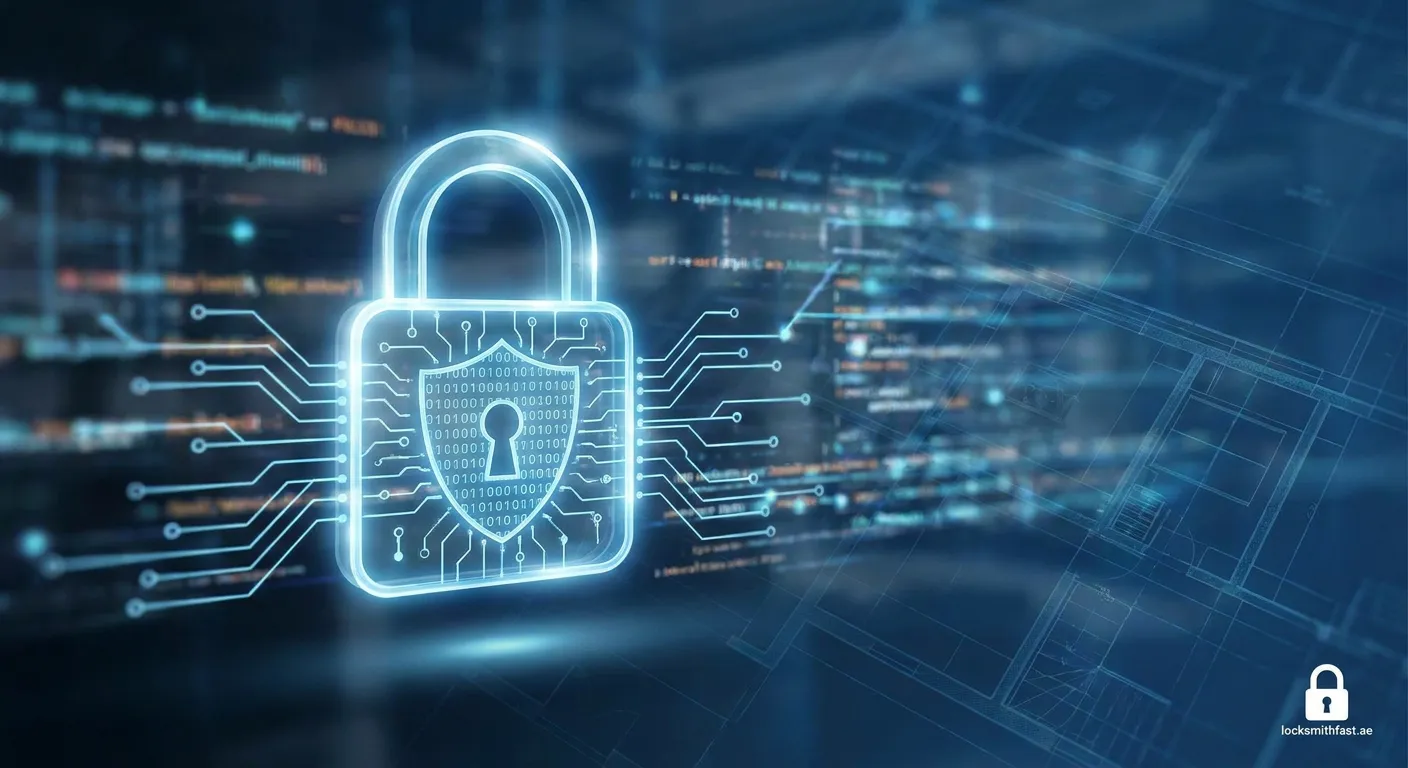
Modern electronic locks protect homes using advanced data cryptography. Discover the core protocols safeguarding wireless door systems and keeping unauthorized intruders away.
The Crucial Role of Cryptography in Smart Access
When securing modern residences, understanding smart lock encryption standards is essential for homeowners who want to balance digital convenience with rock-solid physical security. A smart lock functions by transmitting verification tokens over wireless networks such as Bluetooth, Wi-Fi, Z-Wave, or Zigbee. Without stringent cryptographic algorithms, these digital signals could be intercepted, cloned, or manipulated by cybercriminals.
Symmetric vs. Asymmetric Encryption in Locks
Smart door hardware utilizes complex mathematical ciphers to conceal access codes and biometric commands:
- AES-128 and AES-256 (Advanced Encryption Standard): Widely recognized by financial institutions and government agencies, AES uses symmetric key block ciphers. AES-128 offers robust defense against brute-force attacks, while AES-256 provides military-grade data protection for high-security environments.
- RSA and Elliptic Curve Cryptography (ECC): These asymmetric systems generate public and private key pairs, establishing authenticated handshakes between mobile smartphones and smart locks before transmitting commands.
Key Wireless Communication Protocols and Ciphers
Every wireless frequency introduces distinct security layers. Gaining a deep view through understanding smart lock encryption standards helps you evaluate how different communication protocols safeguard your home perimeter:
- Bluetooth Low Energy (BLE): Uses end-to-end proprietary or AES session encryption to protect point-to-point smartphone unlocks from eavesdropping.
- Z-Wave Security (S2 Framework): Employs Elliptic Curve Diffie-Hellman (ECDH) key exchange and AES-128 encryption, virtually eliminating man-in-the-middle exploits.
- Zigbee 3.0 Standard: Features 128-bit AES network and link keys, ensuring verified authentication between home automation hubs and door access points.
- Wi-Fi Direct and Cloud Bridges: Relies on TLS/SSL (Transport Layer Security) channels to protect cloud synchronization and remote unlocking features across public internet paths.
Robust encryption renders intercepted wireless packets completely unintelligible, ensuring that captured signal data cannot replicate an authorized key.
Countering Replay Attacks and Signal Sniffing
A primary threat to digital locks is the replay attack, where an attacker records an encrypted transmission and broadcasts it again to unlock the door. Quality digital locks counteract this via rolling codes, cryptographic nonces, and timestamped authentication tokens. Through understanding smart lock encryption standards, users can identify whether a lock generates single-use ephemeral tokens for every locking and unlocking event.
Essential Firmware and Key Management Best Practices
Security does not end with cipher specifications; consistent maintenance is vital:
- Automatic Firmware Updates: Regularly patch device software to eliminate newly discovered security vulnerabilities.
- Two-Factor Authentication (2FA): Add multi-factor verification on the companion mobile app to prevent unauthorized digital key creation.
- Encrypted Key Storage: Select devices housing cryptographic secrets within tamper-resistant hardware security modules (HSM) or secure elements.
Securing Your Digital Home Today
Choosing robust hardware ensures total peace of mind. For reliable smart hardware updates or professional installation, trust our team at Lock-change Remah to protect your home with high-grade digital security solutions.
 smart locks, encryption standards, home security, IoT security, AES 128

